

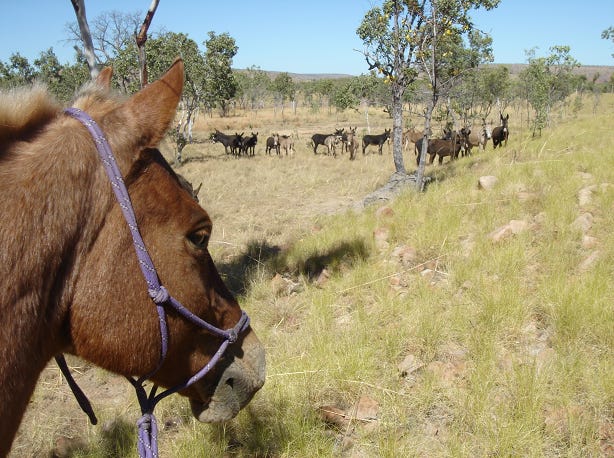
The donkeys on death row at Kachana Station remain alive - for now.
It’s been a couple of weeks since a proposal landed with decision makers in the Western Australian government. That proposal has since been shared with major pastoral industry and other bodies throughout the region.
The proposal would avert the donkey cull, that Kachana Station has been ordered to enact by the Department of Primary Industries and Regional Development (DPRID), for an initial 12 month period. In that time, a global consortium of researchers would further investigate the enormous potential of Kachana’s regenerative innovation in the northern Kimberley region of the state, before the opportunity is lost.
Meantime, that research consortium has continued to grow. Along with others who are exploring how Kachana, in the words of globally renowned ecologist, filmmaker and founder of the Ecosystem Restoration Communities, John D Liu, could become a living lab for regenerative innovation.
As was said to me this week, this is far from just a pastoral matter. It has relevance to landscapes and communities in rangelands everywhere. For flood and wildfire prevention, waterway restoration, productive capacity, biodiversity regeneration, clean air, nutritious food, and communities that are healthy and prosperous.
As hydro-geologist, landscape ecologist, and former DPRID employee, Jardine Macdonald, put it in submitting the proposal:
We see an opportunity to turn a long-running conflict into a transparent, evidence-led resolution that protects biosecurity, preserves public value and allows all parties to move forward constructively.
The initial 31 August deadline for at least a partial cull has passed. Kachana will now proceed with submitting its compliance report to DPIRD this week. That report will declare that no donkeys have been shot, but that the Kimberley Rangelands Biosecurity Association (KRBA), as reported here two weeks ago, has been engaged to do that shooting in their next scheduled round of May 2027.
Kachana will then wait to hear whether the government agrees to that May 2027 plan for implementing the Pest Control Notice (PCN) that has the donkeys in the gun.
If it does, between now and then presents the time frame for relevant stakeholders to meet and discuss the merits of the broader proposal. Though, in reality, that would be expected to happen sooner than later.
The research consortium, and other interested parties in natural capital projects and the like, will also continue with their engagement.
If you’re interested in getting involved too, or signing the open letter within, or expressing interest in some other contribution, complete the Kachana Research Interest Register.
It includes further background, films and research. Anyone can help by registering their interest in seeing this research properly assessed. With thanks to everyone who has engaged so far.
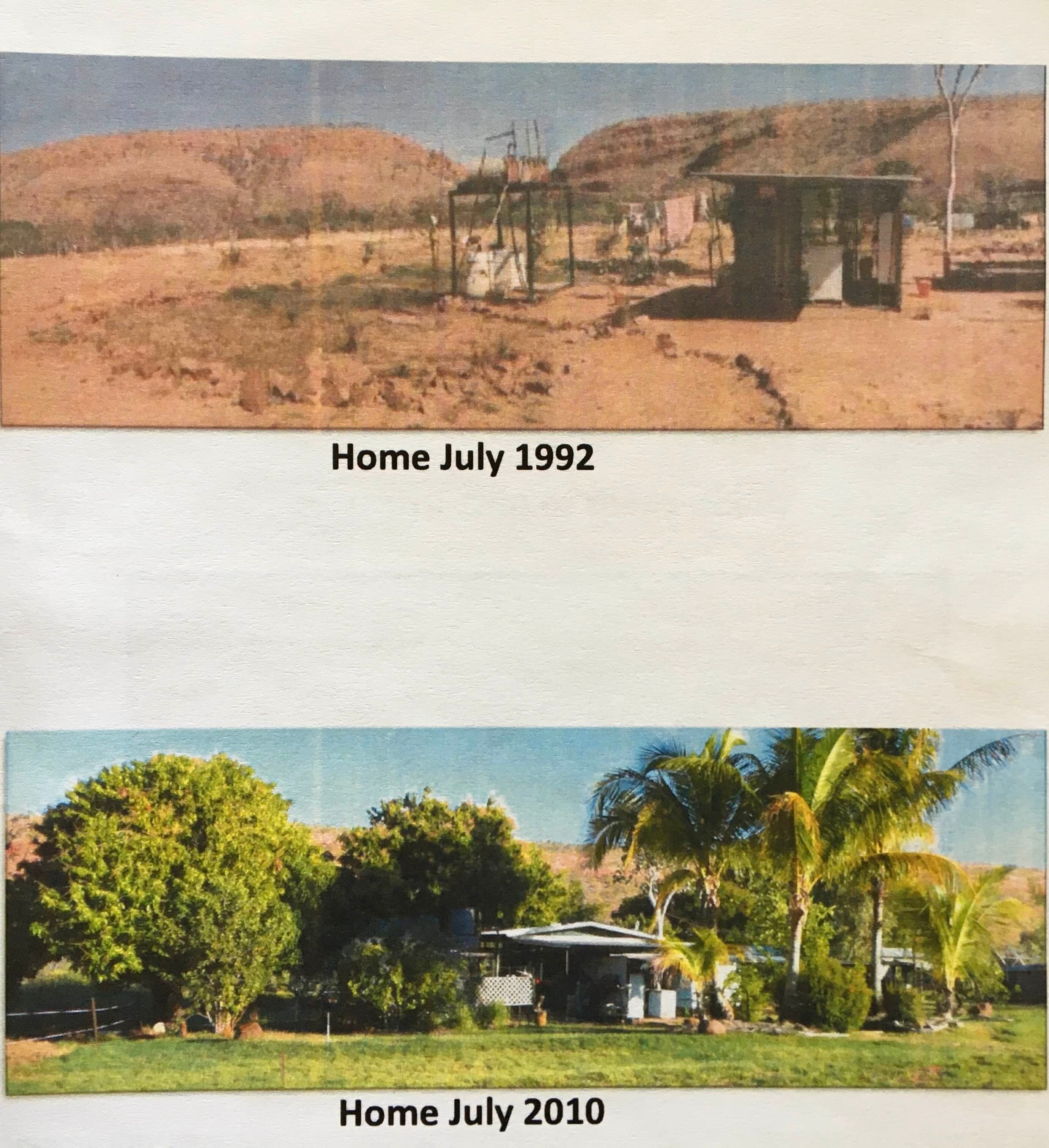
For more photos of the Station’s extraordinary regeneration, see the website of the centenary episode of the podcast: Wanted, Land Doctors. Or watch the half hour Australian Story episode, viewed more than 1.6 million times to date.
Thank you for facilitating the dissemination of this story AJ. Nothing like a reprieve! Does a coordinated framework for future research and archive for past (and current) research exist yet? If so, maybe a plan to identify knowledge, funding and capacity gaps could be developed for each of the future research pathways. A timeline would also help to manage who was available to help and when.
Breathing a sigh of relief for now at least, such a great opportunity here. Thank you AJ for all your efforts to save the Kachana donkeys and further regenerative practices.