

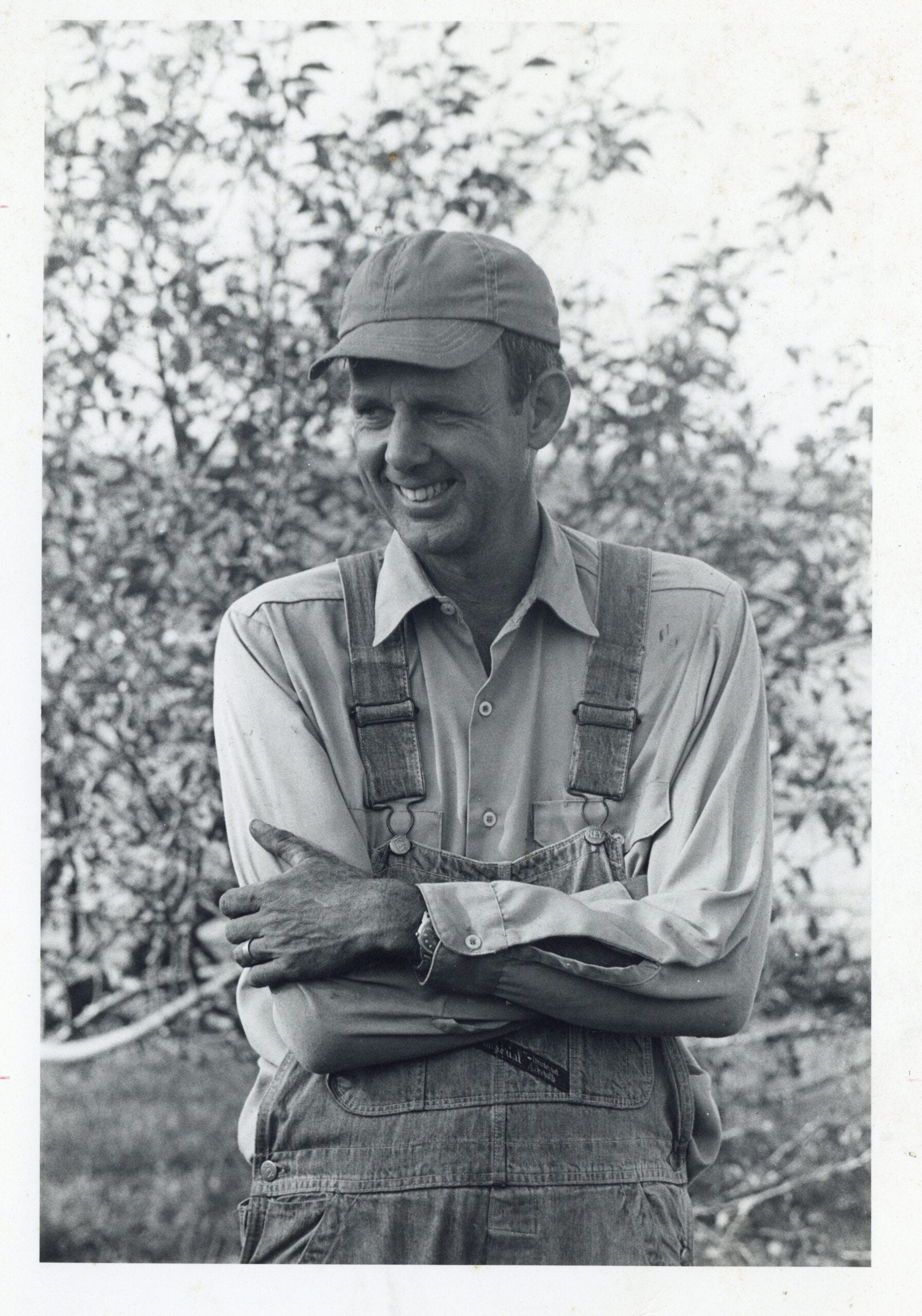
Many a heart broke when revered farmer, poet and prophet, Wendell Berry, died last week. Only days before, Cole Mannix, the founding President of Old Salt Coop, sent round the first video from the Old Salt Festival back in June, featuring Wendell’s daughter Mary in riveting conversation with Meriwether Lewis Hardie.
Cole opened the occasion by describing the impact of ‘somebody handing me a book by Wendell Berry’, when he was at college. After graduating, he and his brother ‘made a pilgrimage’ to what they thought might be the Berry farmstead in Henry Country, Kentucky. They didn’t want to bother anybody, but ‘we were fans’.
I felt the same when passing nearby last year. So like Cole, I just enjoyed reading more, learning of The Berry Center founded by Mary in 2011, and paid distant homage.
For Mary’s part, she landed her presence at Old Salt by reading a poem by her father. Sitting on a trailer in an open tent on a Montana paddock, she read from a single sheet of paper. I wondered if the writing was in pencil, given Wendell often wrote (as did the old mentor of mine who introduced me to Wendell’s work) in pencil.
When I first met Cole Mannix, it was for a conversation on The RegenNarration podcast. He rolled out a line that became the title of that episode - ‘imagining a society to match the scenery’. Picking up that theme, the poem Mary chose was A Vision. And she reads it (at about the 7 minute mark in the video below) with the same distinctive intonation of her father. The end of each line is its own joy.
Veteran Pulitzer Prize winning journalist, Robert D. McFadden, wrote in this New York Times obituary:
Mr. Berry first won national attention with “The Unsettling of America: Culture & Agriculture” (1977), a manifesto to save small farms from big business and a government bent on agricultural efficiencies that, he said, were destroying the land and a way of life. The book launched the modern movement for sustainable farming and became a conservationist classic.
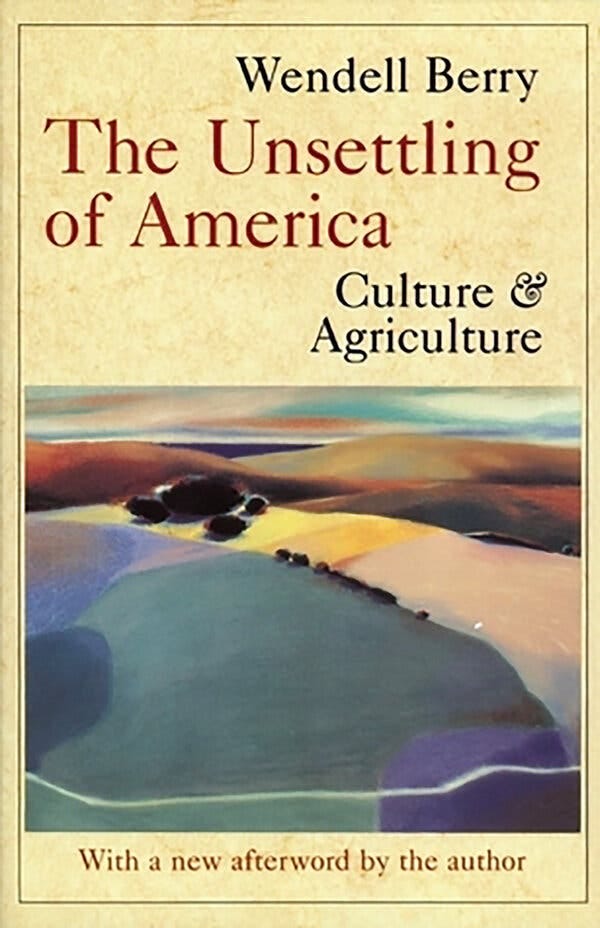
That book is about to turn 50. And it could just as well be called The Unsettling of Australia.
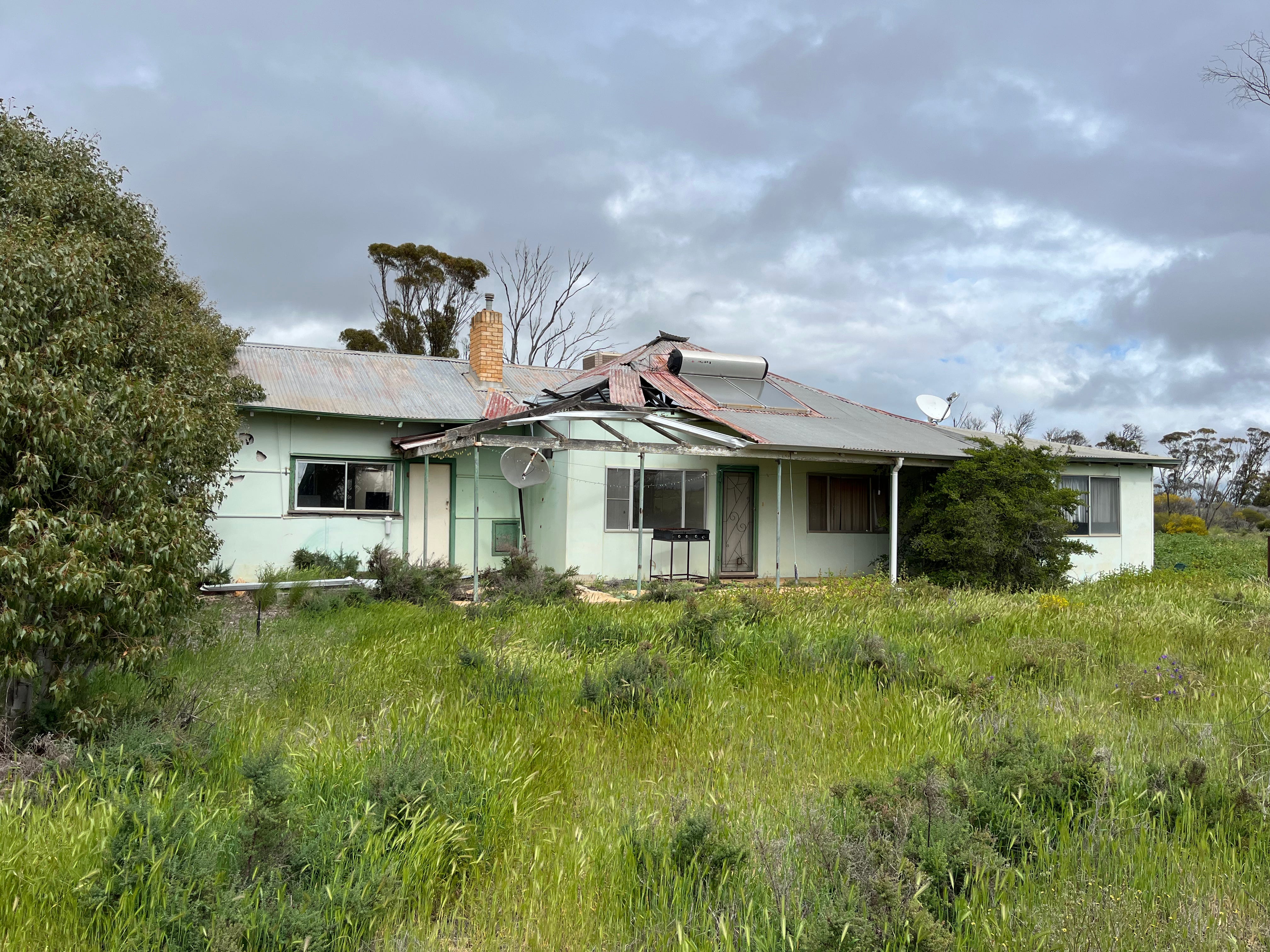
I was out at the Haggerty family’s place just last weekend, accompanying them around the farm that used to be many. A number of deserted houses, increasingly worse for wear, stand monument to where there used to be families tending food, community and Country.
The Haggerty’s were increasingly among the last ones standing out there in the north central Western Australian wheatbelt. Their extraordinary regenerative work, culminating in being recognised as last year’s Western Australians of the Year, has started to reverse that pattern and attract community back.
Wendell also wrote novels. At Old Salt, Mary revealed some of the family and community members going by other names in those books. McFadden found that while these were less known than Wendell’s essays, many found them moving. For example:
“The Memory of Old Jack” (1974), the recollections of a 92-year-old farmer on his last day of life, was “magnificent,” the English scholar Joan Joffe Hall wrote.
Wendell died at 92. Life’s mysteries.
McFadden later outlined some of the formative threads of Wendell’s life:
Like his siblings — John Jr., Mary Jo and Martha — Wendell helped work the farm. He learned from a grandfather how to harness and drive a team of mules. He was a melancholy boy. But in childhood retreats to the Long-Legged House, he found peace and solitude and read “Walden,” Thoreau’s reflections on two years in a woodland cabin in Concord, Mass.
A rebellious teenager, Wendell was sent to Millersburg Military Institute, a boarding school near Lexington. He hated it. “The highest aim,” he recalled, “was to produce a perfectly obedient, militarist, puritanical moron who could play football.”
I like football, but you could also say Walden was part of my ‘recovery’ from schooling. Education gets a brief review by Mary at Old Salt too.
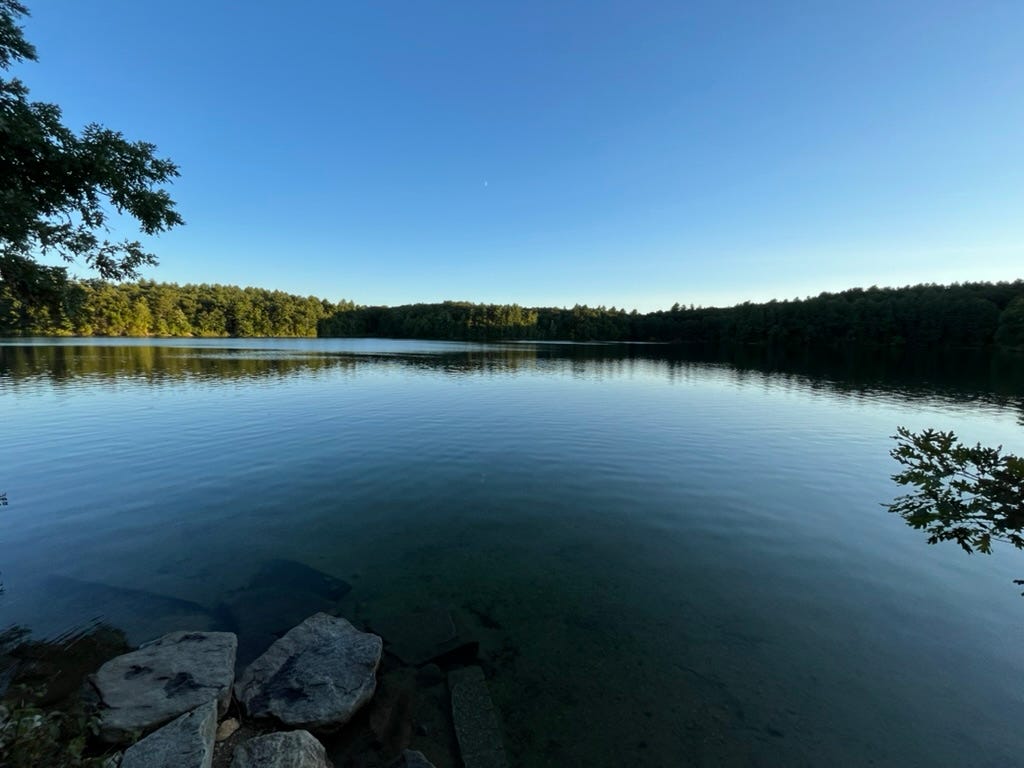
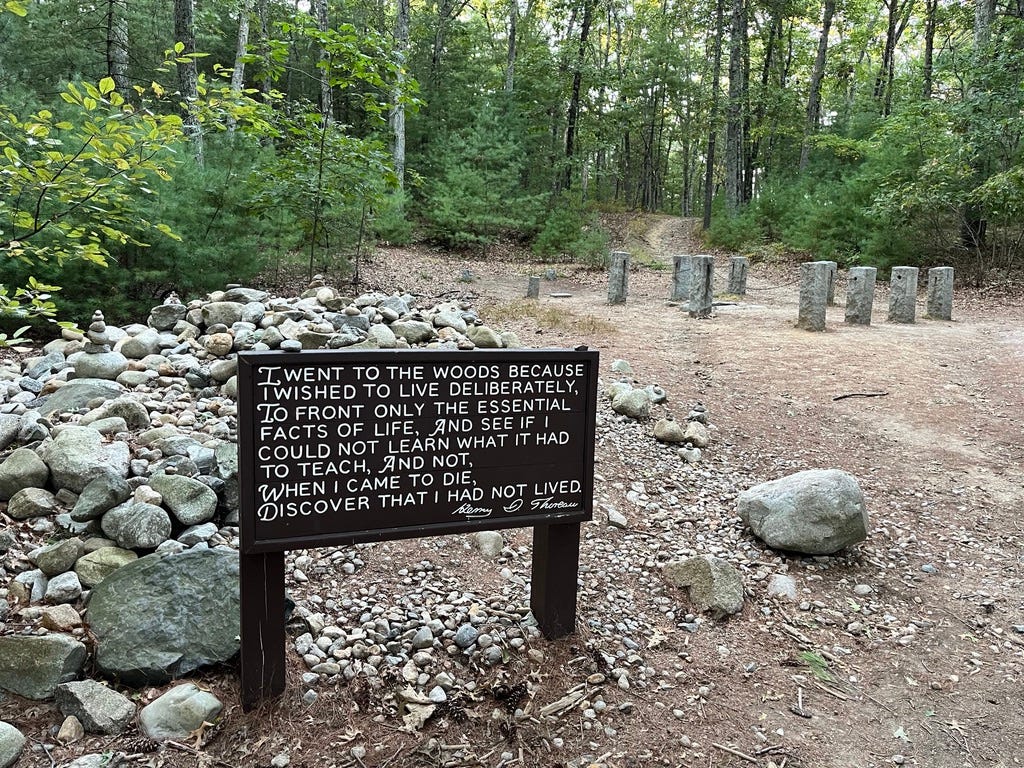
The other day, my friend Tanya Massy and I were lamenting Wendell’s passing. Tanya is the brilliant daughter of Charles Massy, the best-selling author of Call of the Reed Warbler: A New Agriculture, A New Earth. I just remembered while writing this that Paul Hawken described that book as “a definitive masterpiece that takes its place along with the writings of Wendell Berry”, among others. Charles and Wendell did meet at the time of that book release too. Oh to have been the dog on that walk.
I mentioned to Tanya that I’d just watched Mary Berry opening the Old Salt Festival with a reading of A Vision. She said oh, that’s the poem I carry with me and turn to in hard seasons. ‘It has never failed to steady my spirit and help me re-find my courage.’
In turn, I told her of the Wendell poem that I’ve carried with me everywhere for almost a decade now: A Timbered Choir. Ever since I saw these opening minutes to this timeless cinematic portrait of the man.
Two of the most transcendent, impactful and prescient minutes of film I’ve ever seen.
The poem starts:
Even while I dreamed I prayed that what I saw was only fear and no foretelling,
for I saw the last known landscape destroyed for the sake
of the objective, the soil bludgeoned, the rock blasted.
Those who had wanted to go home would never get there now.
And ends:
Every place had been displaced, every love
unloved, every vow unsworn, every word unmeant
to make way for the passage of the crowd
of the individuated, the autonomous, the self-actuated, the homeless
with their many eyes opened toward the objective
which they did not yet perceive in the far distance,
having never known where they were going,
having never known where they came from.
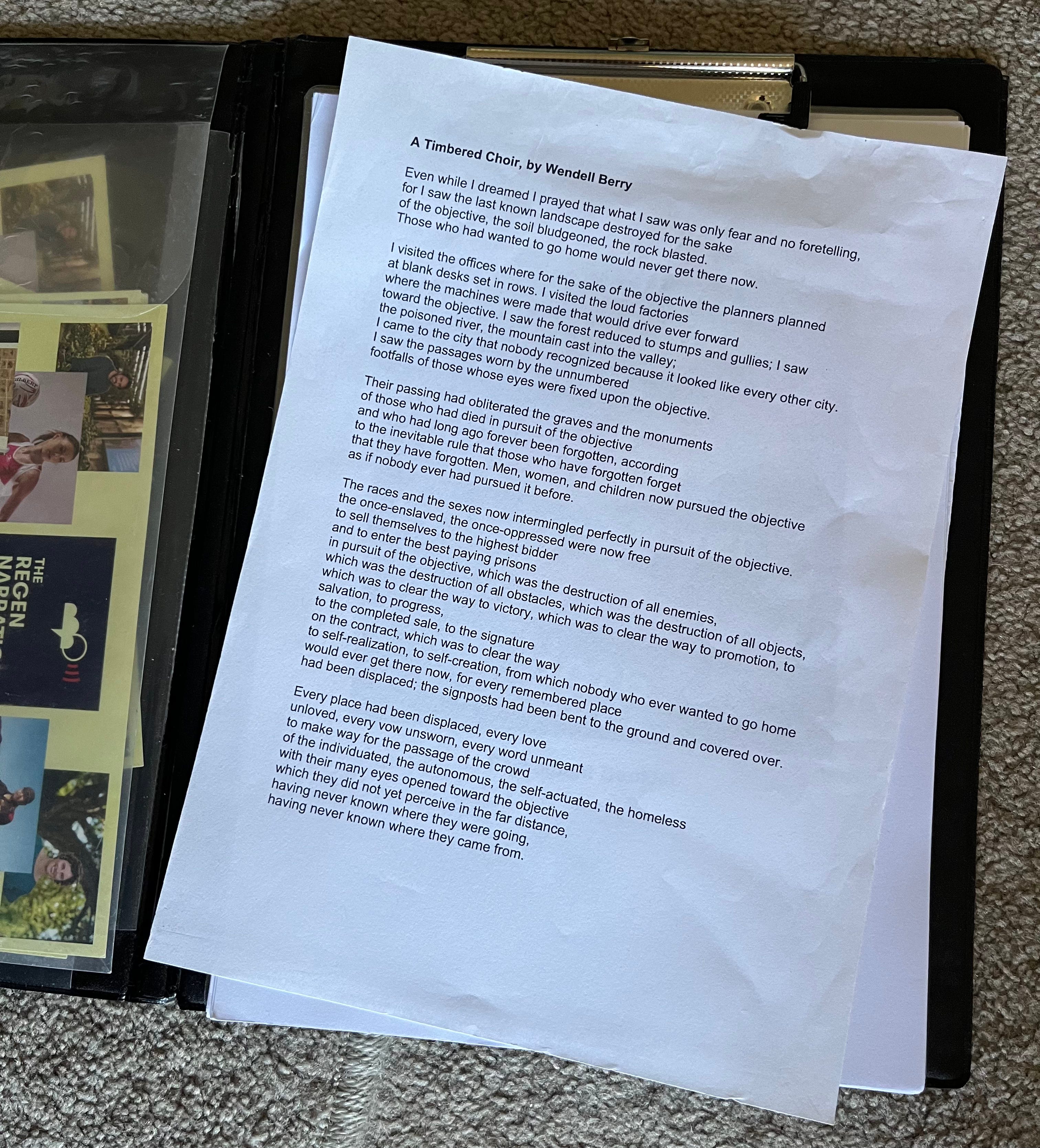
So where are we from? To which our homecoming would offer embrace. And where are we going? The motivation for Mary to recite A Vision:
If we will have the wisdom to survive,
to stand like slow-growing trees
on a ruined place, renewing, enriching it,
if we will make our seasons welcome here,
asking not too much of earth or heaven,
then a long time after we are dead
the lives our lives prepare will live
there, their houses strongly placed
upon the valley sides, fields and gardens
rich in the windows. The river will run
clear, as we will never know it,
and over it, birdsong like a canopy.
On the levels of the hills will be
green meadows, stock bells in noon shade.
On the steeps where greed and ignorance cut down
the old forest, an old forest will stand,
its rich leaf-fall drifting on its roots.
The veins of forgotten springs will have opened.
Families will be singing in the fields.
In their voices they will hear a music
risen out of the ground. They will take
nothing from the ground they will not return,
whatever the grief at parting. Memory,
native to this valley, will spread over it
like a grove, and memory will grow
into legend, legend into song, song
into sacrament. The abundance of this place,
the songs of its people and its birds,
will be health and wisdom and indwelling
light. This is no paradisal dream.
Its hardship is its possibility.
Just a couple of days after Wendell’s passing, Mary was on the local Louisville news. This time, her face carrying a distinct weight of emotion.
Reflecting on the many of Wendell’s words to live by, she chose these: “It’ll never be so bad that we can’t do the right thing that is right in front of us to do.”
And if we ever doubted it, the families Berry, Mannix, Massy, Haggerty, Hawken, and every other story in Mary’s library there (can you spot Call of the Reed Warbler?), are evidence. Along with so many others we may never hear about.
This is no paradisal dream. Its hardship is its possibility. And it is possible. Those who had wanted to go home are able to get there now.
UPDATE 7 October 2026: An audio version of this tribute, featuring the voices of Wendell and Mary Berry, was released in episode 323 of The RegenNarration podcast.
Post-script: I just watched the legendary journo and interviewer, Bill Moyers, with Wendell in 2012 at The Berry Center. Beautiful production, in which (at the 19m mark) Wendell cites William Butler Yeats saying: "Things reveal themselves passing away."
https://www.youtube.com/watch?v=95VcefsgsfE
just beautiful